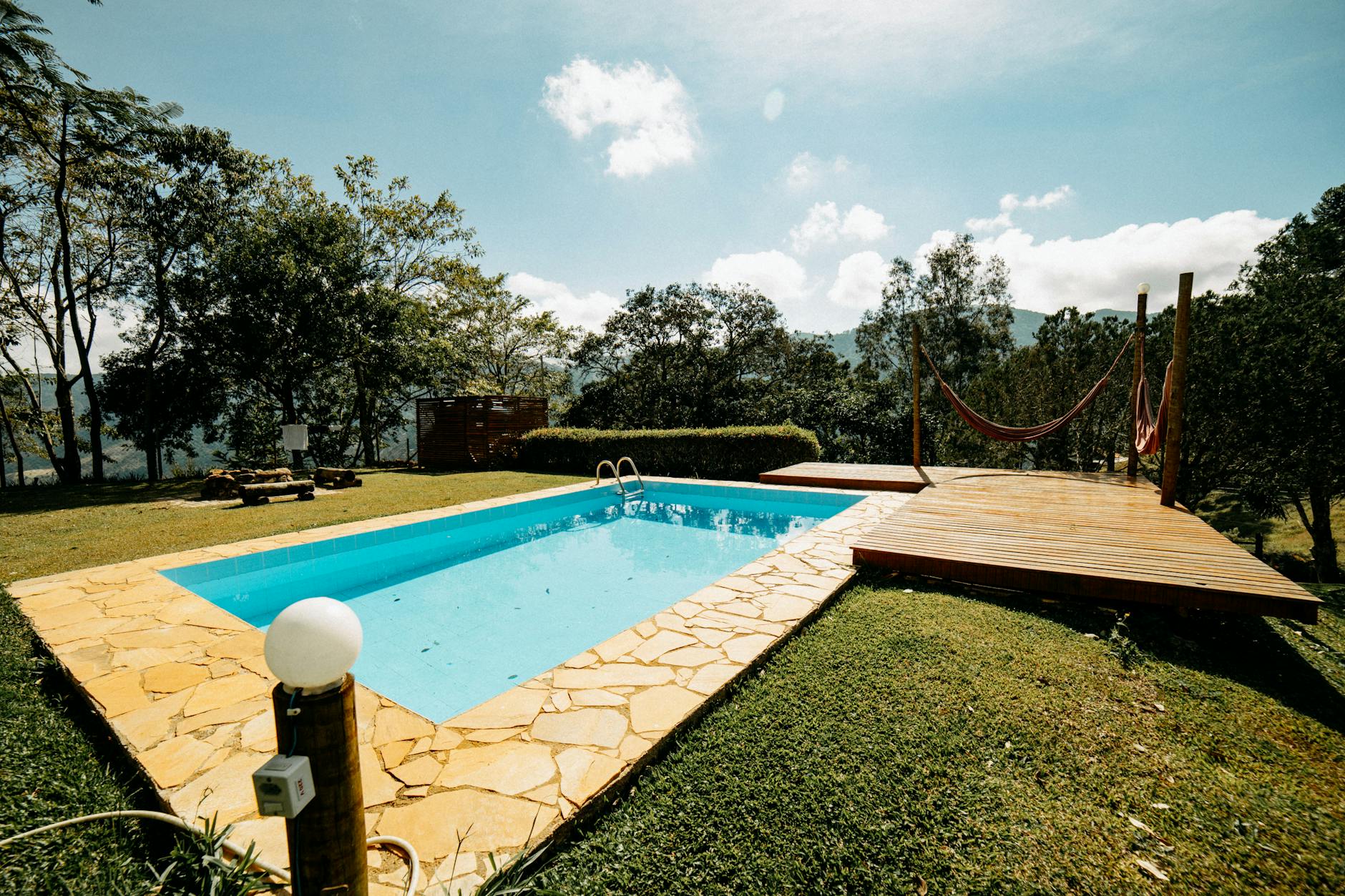
Pool Decks in Washington Township, NJ
A concrete pool deck in Washington Township, NJ needs to handle constant moisture exposure and bare feet on a surface that gets hot in summer. Whether you're installing a new deck, replacing an old one, or extending an existing patio to surround a pool, the finish and drainage decisions matter more here than on most other flatwork. This page explains what pool deck installation involves across Gloucester County and what finish options make sense for residential pools.
What Pool Deck Installation Involves
Pool deck work starts with grading to establish drainage away from the pool edge and the house. A deck that retains water creates surface degradation faster, causes settlement, and poses a slip hazard. The concrete is poured in sections around the pool perimeter with expansion joints at regular intervals and at the joint where the deck meets the pool coping.
The slab typically uses the same 4-inch thickness and compacted gravel base as a patio, with additional attention paid to the joints where the deck meets the pool shell. Incorrectly detailed joints allow water intrusion that undermines the base material over time. This is one of the areas where shortcuts during installation show up as problems within five years.
Finish Options for Pool Decks in Washington Township
- Broom finish — lowest cost, functional traction, rougher on bare feet during summer heat
- Exposed aggregate — better traction, more comfortable underfoot, natural appearance; the most practical choice for pool surrounds in New Jersey
- Stamped concrete — most decorative, requires sealing with an anti-slip additive, and higher maintenance than exposed aggregate
- Coated surface — applied over existing concrete; extends life of a sound slab, requires periodic recoating
For New Jersey pools, exposed aggregate is the most practical finish. It handles the combination of wet conditions and bare-foot traffic well, and doesn't require the periodic resealing that stamped concrete does. See our decorative concrete page for details on stamped and colored options.
What Affects Pool Deck Cost in Gloucester County
- Deck size and shape — curves and angles take more forming labor
- Existing concrete removal
- Drainage modifications needed
- Finish type
- Coping condition — whether pool coping needs to be replaced alongside the deck
- Equipment access to the yard
When Not to Replace the Pool Deck
If your pool deck has surface scaling or minor cracks but is level and draining correctly, a resurfacing overlay may extend its life by 8–12 years at lower cost than replacement. That option only works if the slab is structurally intact. See our concrete repair and resurfacing service for guidance on when that's a real option versus a short-term fix.
The Portland Cement Association has published guidance on concrete in wet and outdoor environments. Also see our full services list.
Get a Free Estimate
Describe your project and we will tell you what makes sense before any work begins.