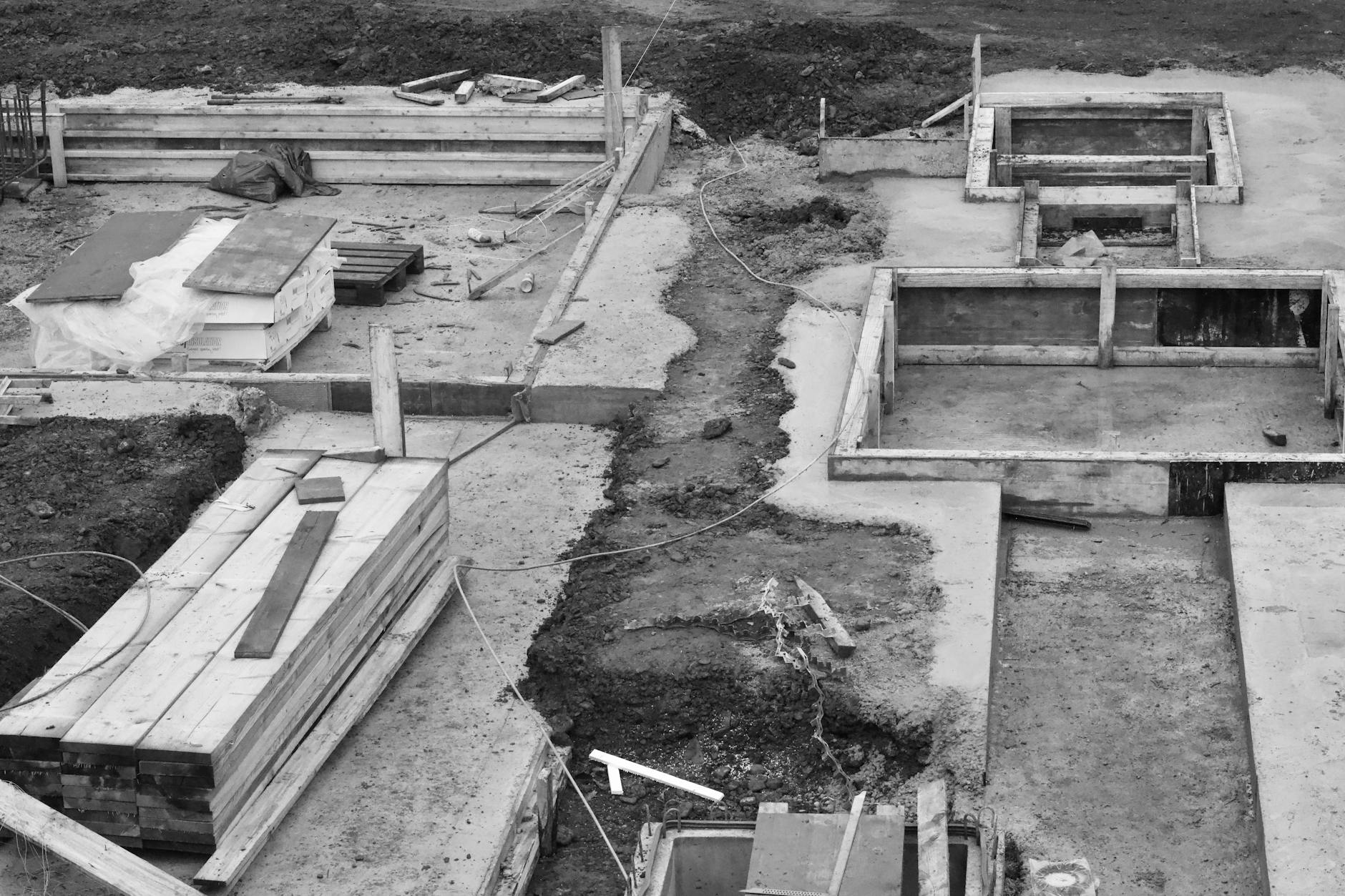
Foundations and Slabs in Washington Township, NJ
Concrete foundation work in Washington Township, NJ covers poured concrete footings, basement walls, and floor slabs for additions, detached garages, sheds, and new construction. Foundation concrete carries more consequence than surface flatwork — a footing that doesn't reach frost depth or a slab poured on unstable material creates long-term structural problems that are expensive to correct. This page explains what the work involves and when it requires a licensed contractor.
Types of Foundation Work We Handle
Footings are the concrete base that sits below frost depth (minimum 36 inches in Gloucester County) and supports the structure above. They must be sized for the load they carry — an addition footing is different from a shed footing. Undersized or shallow footings are one of the most common causes of structural problems in New Jersey homes.
Basement walls are formed, reinforced with steel rebar, and poured in sections. They require waterproofing on the exterior and, depending on site drainage, a footing drain tile system to manage groundwater.
Floor slabs — garage floors, basement floors, and addition slabs — are poured on compacted gravel with a vapor barrier below. The standard for a residential garage floor is 5 inches of concrete over 4 inches of gravel. Skipping the vapor barrier is a common shortcut that leads to moisture problems inside the garage.
What the Process Looks Like
- Excavation to below New Jersey's 36-inch frost depth
- Footings formed, reinforced, and poured
- Cure period before walls are formed above footings
- Wall forms erected, rebar placed, concrete poured
- Forms stripped, exterior waterproofed, drain tile installed if needed
- Backfill and grading
- Interior floor slab poured on compacted gravel and vapor barrier
Timeline varies with project scope. A simple garage slab without footings takes one to two days. A full basement foundation with walls is a one-to-two week project, not counting excavation.
What Affects Foundation Cost in Gloucester County
- Project scope — footings only versus full basement
- Excavation depth and soil conditions on the site
- Reinforcement specifications required by plans
- Waterproofing and drainage systems
- Permits — all structural concrete requires them in New Jersey
When Not to Hire a Contractor
Structural foundation work should not be a DIY project. Footings that don't reach frost depth, slabs poured without vapor barriers, and walls that weren't properly reinforced all create problems that become visible years later and are costly to fix. If you're doing a small non-structural surface slab that carries no load, the risk profile is different — call and we'll tell you honestly which category your project falls in.
The American Concrete Institute publishes residential construction standards, and the NJ Division of Consumer Affairs oversees home improvement contractor licensing in New Jersey. See also our concrete driveway service and all services we offer.
Get a Free Estimate
Describe your project and we will tell you what makes sense before any work begins.